
Backstage at Kyle Field: The SSC Teams That Made the Savannah Bananas Game Feel Effortless
More than 102,000 fans packed Kyle Field at Texas A&M University to witness the greatest show in sports as the Savannah Bananas faced off against the Texas Tailgaters in College Station. From nonstop music and choreographed dances to over-the-top entertainment and electric energy, the Bananas transformed the home of the Aggies into a vibrant sea of yellow and blue.
The unforgettable night not only redefined the Kyle Field experience, but it also set a new attendance record for the Savannah Bananas.
Long before the Savannah Bananas stepped up to bat and turned Kyle Field into the biggest stage in Banana Ball history, a different kind of performance was already underway.
For SSC’s custodial and maintenance teams, creating an exceptional fan experience starts months before the stadium fills on gameday.
Kyle Field by the Numbers:
- Kyle Field is the 4th largest stadium in the nation and the sixth largest in the world
- SSC supports 100% of events, from classic football gamedays to concerts, soccer friendlies, and more
- SSC prepares and maintains more than 1.3 million square feet, delivering consistency whether the spotlight is national or routine
What made this night different was not the size of the crowd, but everything that happened before the gates opened.
With two days of heavy rain soaking the stadium before the first pitch and four additional athletic events unfolding across campus at the same time, the margin for error disappeared way before gates opened.
Months before the first fan arrived on campus, the real work was already underway.
The Storm Before the Spotlight
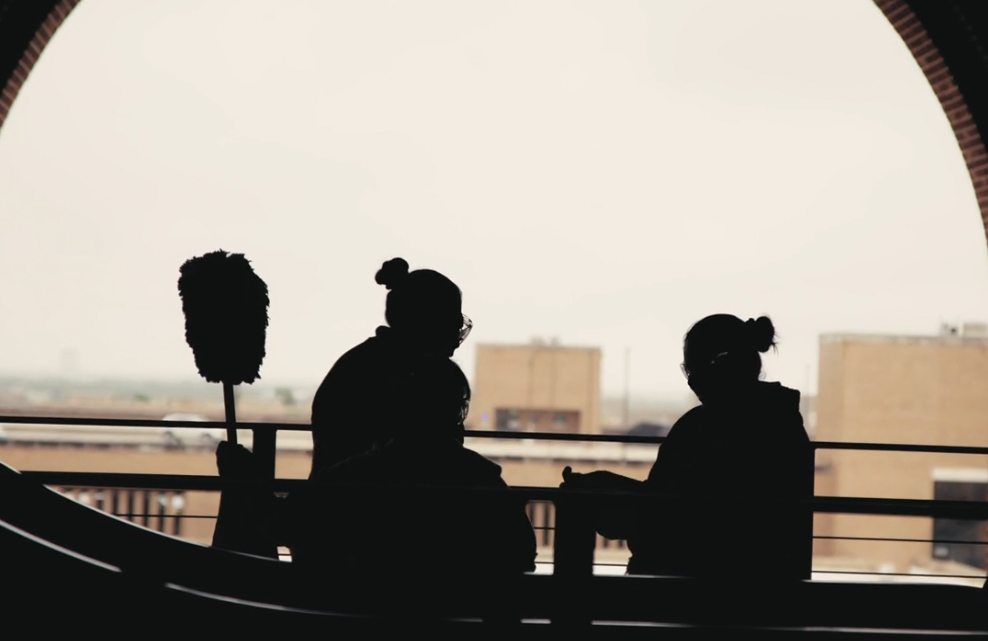
Leading up to gameday, the storms rolled into College Station. For two straight days, relentless rain soaked the grounds, leaving behind puddles, mud, and standing water in the very places where thousands of fans would soon walk. It was the kind of weather that instantly creates a whole new layer of work on top of the work that already had to be done.
AJ Sims, Unit Director for SSC at Texas A&M, summed it up best: major events are opportunities, but they always come with pressure. “My team likes it when the pressure is on,” he said, even with rain actively coming down.
Maintaining a stadium of this magnitude is no small feat, even on a dry and sunny day. Kyle Field has:
-
- 12 concourses
- 3 levels
- 117 premium spaces spread across clubs and suites
Add in the rain and other key matchups in baseball, softball and tennis on campus, and this is where teamwork stops being a buzzword and is demonstrated as a practice.
This is where teamwork stops being a buzzword and is demonstrated as a practice.
“Custodial work is about readiness. Whether it is rain, a packed stadium, or back to back events, our team shows up knowing millions of details matter. We take ownership of every space because we know fans come here to enjoy the moment, not worry about the conditions.”
– AJ Sims, Unit Director

Preparing for the Savannah Bananas Ball Game
Kyle Field isn’t your ordinary football stadium. As AJ Sims says,“I like to look at it as our stadium is an Airbnb. We’re essentially renting our stadium out and hosting new guests for special events.”
The team is preparing for each event for months, but often has only two weeks to complete an entire flip from event to event.
Before the Savannah Bananas, those two weeks were a buzz of activity. Maintenance teams moved methodically through the stadium, inspecting:
-
- Thousands of lights
- Nearly 900 access points
- More than 60 HVAC units
- 34 vertical transportation systems.
Electrical panels were checked, preventive work orders were completed, and every detail was addressed long before fans arrived.
Meanwhile, custodial prep is not one task. It is dozens, layered and sequenced:
-
- Pressure washing in the weeks leading up to the event.
- Auto-scrubbing concourses and detailing high-touch surfaces.
- Stocking 14 custodial closets across the building so teams can move fast when the building fills.
Everything had to be wiped down, reset, and prepared again after the last stadium event. High-touch surfaces that would soon see tens of thousands of hands were cleaned and checked. Every action was intentional.
Then the rain came.
As storms rolled through College Station in the days leading up to the game, the workload instantly multiplied. Custodial teams revisited every section of the stadium to clear standing water and push it toward drains, ensuring fans would have dry walkways and seating areas when gates opened.

Game Day Choreography at Kyle Field
On the day of the event, the building shifts from preparation to performance. 68 custodial team members supported the biggest Banana Ball game in history. The places that must never fail in a packed stadium, were serviced relentlessly: 384 restrooms, touched every 8 to 12 minutes during the event.
AJ made a promise that was not abstract. It was personal. “I can personally guarantee you won’t see a full trash can.”
This kind of statement that only lands because it is backed by a plan and a team that knows how to execute it.
That execution is not accidental. Supervisor Tiffany Blake described the engine behind the scenes: meetings, checklists, and staffing assignments that map people to the right places at the right time. Premium areas. Suites. Concourses. The highest-traffic zones that swell with fans. Her work also goes beyond tasks – she also cares for people, making sure the team starts strong and stays strong through hydration, breaks, and morale boosting.
And she made the teamwork theme plain and true: “This is a huge stadium, so it takes a lot of great people to make this operation run smoothly.”
Maintenance: The Quiet Brigade
If custodial work is the visible reset, maintenance is the silent stability.
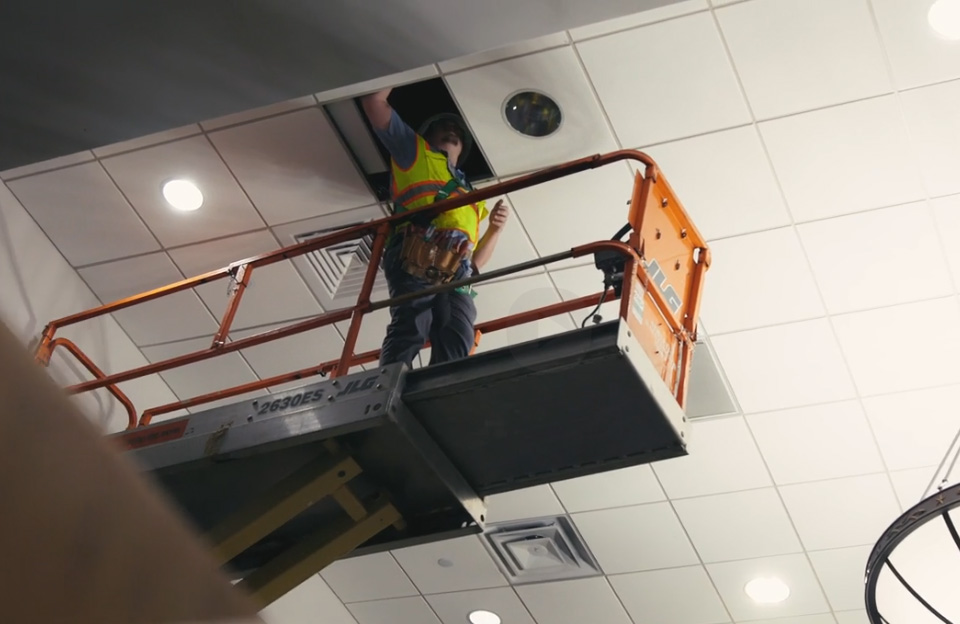
In the week leading up to the event, maintenance completed 41 work orders, plus 16 more the day before the game. They walked restrooms level by level, checked HVAC systems, and verified vertical transportation multiple times through the week.
Jerry Toland, Athletics Maintenance Manager, explained why this works: their readiness is not seasonal. “We’re working the entire year, so when we have events like this, we are ready.”
Then, in the final stretch, it become about the details. They begin to look for the things fans will notice if they are wrong, but would never notice if they are right: A light 30 feet up that needs a new bulb, ceiling tiles that need replacing, paint touch-ups that erase scuffs before the crowd arrives.
“The idea is that they don’t notice what repairs we’ve made.” Jerry said.
During the game, Richard Galvan, Athletics Maintenance Supervisor, described his role as constant motion with a radio in hand. “I have a walkie talkie, I’m hearing left and right from TAMU facilities, personnel, and custodians as well,” he said. He makes rounds, puts eyes on what might be out of place, handles what he can, and pulls in the right trade when a fix needs deeper expertise.
Overall, the team is ready for anything:
-
- 13 maintenance team members on site
- 19 completed service calls
- Average response time of less than 10 minutes.
He also highlighted the larger coordination web, and the departments that have to move together in a high-profile event environment, including working hand in hand with onsite police, fire, and EMS when needed.

Wheels Up: Supporting Fans
There is a moment on event days when traffic and flow of the building completely shifts. Before gameday, teams can use golf carts to navigate the massive facilities. On gameday, this changes for fan safety.
Jacob Gibson, a general technician, explained it in the language of logistics: “Wheels up starts at two. That means we can’t drive our carts, after that, everything is on foot.”
The stadium becomes a maze of steps, stairs, and speed. The numbers tell the story of that movement.
-
- One supervisor logged 21,862 steps on Saturday.
- Another leader walked about seven miles that same day.
Those steps describe the reality of being ready for the unexpected in the midst of the busyness.
Despite a high level of preparation, anything can happen: ceiling tiles drop because of air pressure changes as doors open, toilets break, and the job is to isolate the problem, fix it quickly, and keep everything moving so the fan experience stays intact.
And he summed up the maintenance mindset during the game in one clean line:
“During the game, it’s all about the fan experience.”
Sometimes that means responding. Sometimes it means waiting on standby, staged and prepared, like a crew just offstage, ready to sprint the instant the cue arrives.
Because if the system is working, the fan experience is exceptional, and that is the magic of a stadium at its best: the crowd experiences joy, not logistics.
When fans do not bring up a broken toilet or air not feeling right, that is a sign that everything has been taken care of.
Jerry echoed the same philosophy from the maintenance side:
“The best fan experience is the one where fans don’t notice the work that has been done.”

Pride, Pressure, and the Payoff
By the time fans poured through the gates, the rain was no longer the headline.
The building was dry where it mattered. The restrooms were ready. The touchpoints were addressed. Teams were staged, on radios, on foot, and in motion.
And while Savannah Bananas fans may have been a different crowd than a typical football weekend, the goal stays the same: give visitors the best experience possible, especially when it may be their first impression of Kyle Field and Texas A&M.
AJ captured the heart of it in a line that belongs at the end of any behind-the-scenes story. When asked what makes it worth it, he pointed to the moment the work turns into joy: “When you can see the fans come in and have a great experience, it’s all worth it at the end of the day.”
When the last fan left and the noise finally settled, SSC teams were still there. Post event cleanups began immediately, resetting Kyle Field once again for whatever came next on the calendar.
Another event. Another crowd. Another challenge waiting to unfold.
For SSC custodial and maintenance teams, supporting Kyle Field is not about a single night, even one as memorable as Savannah Bananas. It is about readiness no matter the weather, adaptability no matter the schedule, and consistency no matter the scale.
A sold-out stadium does not run on hype alone. It runs on teamwork, preparation, and the pride of people who show up early, stay late, and erase the evidence of every challenge, including two days of rain, so the only thing fans remember is how incredible it felt to be there.
For additional stories about our incredible teams, browse the content in our news center and follow us on LinkedIn, Facebook, and Instagram.